Location
Los Angeles County & Orange County,
Southern California
BLAST ESTATE SALES
Our team has completed over 350 estate sales
A Full-Service Liquidation Team Located In Southern California. Optimize Your Estate Sale Revenues With Our 9-Day Process!
Blast Estate Sales Offers Customized Solutions based on 25 years of Estate Sale Experience.
From beginning to end comprised of expert setup/advertising, the liquidation of the contents of your home and clearing the space in preparation for your move, close of escrow, etc.
Confidence that all deadlines, such as having the house ready to close escrow, will be met
Whether you are considering a sale to liquidate a large estate or to downsize in preparation for a move, Blast Estate Sales offers customized solutions based on 25 years of estate sale experience.
followed by a plan to maximize the success of your estate sale.

UPCOMING SALES
Reach Out For Your FREE Assessment Today!
Our team has completed over 350 estate sales
Contact us today and lets discuss your goals!
Our Process

GETTING STARTED
Our process starts by meeting with you to understand your goals and objectives for the sale. If your home is closing escrow or you are moving, the desired end result may be to have everything sold and the house left in "broom-swept" condition. In other situations, there may be items you would like to keep or donate. By understanding your goals, we can then deliver the results you want from the sale.
Also referred to as an “assessment” or “walk through”, this initial meeting also enables us to plan how the sale will be staged as well as to determine the number of sales and security staff required for a successful event.

SETTING UP, STAGING AND PRICING YOUR INVENTORY
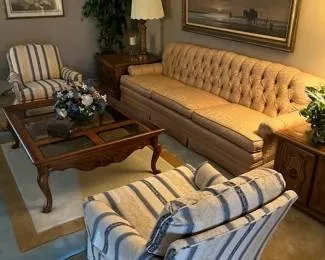
During the setup/staging phase, we organize and merchandise the inventory to highlight key pieces and display your inventory to make shopping easy. Much like setting up a retail store, this process includes the creation of furniture vignettes, organizing inventory on tables and arranging a “flow” through the venue to ensure that shoppers see all items offered in the sale.
Next, we evaluate the inventory to be included in the sale. In this step, we price each item in the sale based on a combination of experience and selling prices on sites such as eBay, Worthpoint, Etsy, Amazon and other e-commerce sites. Under certain circumstances, we will bring in outside appraisers to determine fair market values on jewelry, collectibles, rare antiques, and art.
Depending on the number and types of items that are included in the sale, the process of tagging and staging can take a couple of days to 2 weeks or more.

ADVERTISING THE ESTATE SALE
The key to a successful estate sale is getting a high volume of motivated buyers to your event. To that end, we start taking pictures and building a descriptive list of the inventory on the first day of the setup phase. On average, we shoot 200 pictures for an estate sale, supported by a detailed inventory list, including model numbers on specific items.
These pictures and the inventory description then serve as the foundation of each ad for the sale. By the time the campaign is in full swing, your sale will be advertised through several online channels, on social media platforms, to our existing data base, on the Blast Estate Sale website and with signage in the local area. On average, our online advertising campaigns generate over 7,500 views (clicked and opened) per sale.

THE ESTATE SALE
Estate sales are typically run for two days, usually on Friday and Saturday, from 9:00 a.m. to 3:00 p.m. For estate sales with larger inventories, we may add an extra day and/or extend the hours to ensure an optimal sales outcome. If the local HOA rules place restrictions on estate sales, we work to maximize traffic while staying within the rules of the HOA. If an HOA prohibits estate sales, we can offer an online auction solution to sell your inventory without the traffic generated by a traditional estate sale.
To ensure fairness, we do not sell items prior to the opening of an estate sale, referred to as a “pre-sale”. This policy ensures our shoppers that everything pictured in the advertising campaign will be available when the doors open. As a result, we usually have a line of buyers waiting for the doors to open on the first day of the sale. When we have a line waiting to enter the sale, we allow 10 to 15 people in at a time for the purposes of security and crowd management.

THE BUYOUT / CLEAN OUT + ADDITIONAL SERVICES
After the completion of the sale, at your option, Blast Estate Sales can facilitate a buyout of the remaining inventory and the clean out of trash and items that cannot be sold. The amount of the buyout and the cost of the clean out will be determined after the close of the estate sale (usually Saturday afternoon).
If you agree to the bids for the buyout and/or clean out, the process will be completed, in most cases, by the Tuesday following the sale. Additional after sale services include consigning specific items at future estate sales, assistance with donations and/or arranging house cleaning to bring your home to conditions specified in the closing documents of a home sale or for the return of a deposit on a rental.
PAYMENT + ACCOUNTING
The final step in the process is getting paid. On the Tuesday following the sale, Blast Estate Sales mails out your check, a detailed accounting of the sale and a list showing the prices of all items sold during the estate sale.
That's it, and we hope that you'll keep us in mind for your estate sale!
Have a Question?
Reach Out Today For Your FREE Assessment!
Our Past Sales
CONSULTATIONS OFFERED BY BLAST ESTATE SALES ARE ALWAYS FREE - SCHEDULE AN ASSESSMENT OF YOUR SALE TODAY!
Jewelry - Sterling silver, gold, Brighton, vintage, costume
Vintage handbags
Vinyl records
Kitchenware
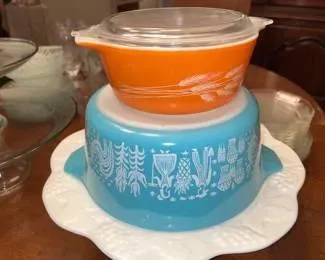
Vintage Pyrex
Cast iron skillets
Pots, pans, utensils
Flatware sets
Vintage lighting
Art
Cuisinart Professional Series appliances
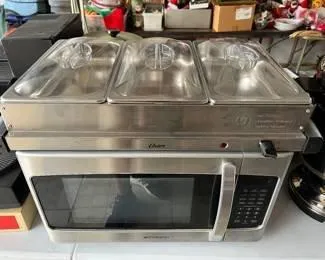
Countertop appliances
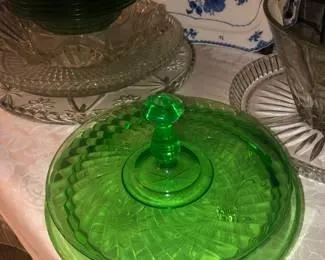
Glassware
Vintage figurines
Mantle clocks
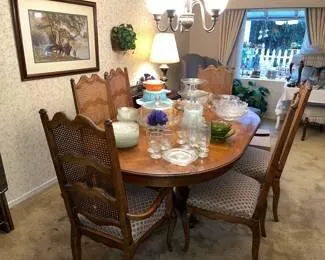
Vintage furniture
Sofas
Thomasville pieces
Coffee tables
Dressers
Garage
Men's and women's apparel, shoes, accessories - 1980s & 90's
A vintage wood ice box
Power & hand tools
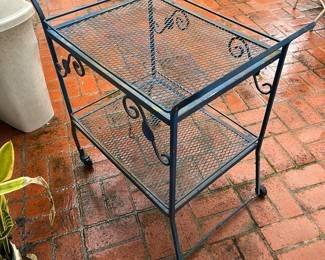
Garden/patio
Potted plants
Yard art
Patio furniture
Bird houses
Christmas decor








SHOULD YOU PUT UNSOLD ESTATE SALE
ITEMS IN STORAGE?
At the completion of virtually every estate sale there is inventory that remains unsold, a circumstance that may include anything from old paperbacks to family heirlooms. At this point in time, you have three primary options: accept a buyout offer, donate the items or keep them.
At first glance buyouts, which typically pay pennies on the dollar versus estate sale prices, and donations, which pay nothing but may generate a tax deduction, may not seem like great options. These options do, however, serve a key purpose: they facilitate the clearing of the home while paying extra money on top of proceeds generated by the estate sale, either immediately with a buyout, or down the line with a deductible donation. \
The third option, keeping unsold items, generally unfolds for three distinct reasons; utility, sentimental value or the feeling that items may be sold for higher prices at a later date. An example of keeping an item based on utility might be a near-new outdoor barbecue that is used to replace an older model currently in use. In this example, keeping the barbecue from the estate sale provides an immediate benefit and saves money by delaying the need to buy a new barbecue.
Holding on for sentimental or higher sale prices, on the other hand, can put you on a proverbial slippery slope, especially if the items are placed in storage. The problem here is that, as soon as items are put into storage, the math starts working against you as monthly installment payments are made to keep things you already own. Over time, these payments sap the net value of the items intended for sale and, while there is no accounting for sentimental value, the cost is ongoing with a bill due every month.
So, what to do? Estate sales often take place in time frames fraught with emotion and endless “to-do” lists. In these situations moving items to storage offers both convenience and a way to delay the process of letting go, but these benefits tend be the greatest early on and diminish over time. This is especially true if the intention is to sell items at some point in the future. By comparison, a buyout or donation can be completed within a week, provide a financial benefit and avoid the drain of monthly storage bills.